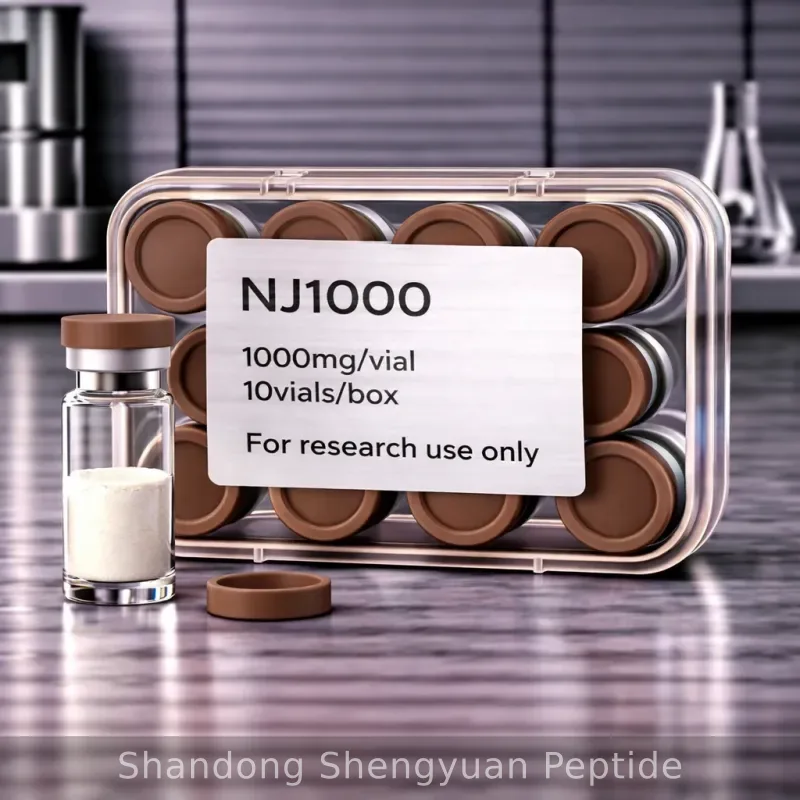
About NAD+
NAD+ (beta-nicotinamide adenine dinucleotide) is the oxidized form of a central metabolic coenzyme that carries reducing equivalents between enzymatic reactions. Rather than a conventional peptide, it is a dinucleotide composed of nicotinamide and adenine joined through two ribose-phosphate bridges, a structure that underpins its role as an electron acceptor in glycolysis, the tricarboxylic acid cycle, and oxidative phosphorylation. Investigators use NAD+ to reconstitute dehydrogenase assays, to study sirtuin-catalyzed deacylation reactions, to monitor cellular redox state with biosensors, and to examine how NAD+ pools influence PARP activity, DNA repair pathways, and aging-related cell biology. Because the molecule is hygroscopic and prone to slow hydrolysis into nicotinamide and ADP-ribose, researchers depend on dry, high-purity material for reproducible enzyme kinetics. Shandong Shengyuan supplies NAD+ at 99.5% purity by RP-HPLC or higher, with water content controlled by lyophilization and Karl Fischer analysis, plus LC-MS confirmation and batch traceability. For research use only; not for human or veterinary use.
Research Applications
- Dehydrogenase enzyme assays
- Sirtuin activity studies
- Redox and bioenergetics research
- PARP and DNA repair experiments
- Aging and senescence cell models
Quality & Documentation
Every batch of NAD+ is manufactured under our documented quality system and released with a Certificate of Analysis covering HPLC purity, mass spectrometry identity, peptide content, water content, and endotoxin. The batch code on your vial can be verified online in the COA lookup section of this site.
 SS-31 Elamipretide
 MOTS-C
 GHK-CU